Industrial alliance: 02 / five-state routing Intake: open Shift: 24/7 Tel: +1 (305) 471-9286
inflpanjlott Surface Finishing
Call +1 (305) 471-9286
Home → Services → Electropolishing

Electropolishing and passivation with inflpanjlott.com

Electropolishing is not a shiny coating and it is not a chemical cleaner. It is a controlled removal of a few microns of metal that leaves a surface with no directional scratches, no grinding lay and no risk of embedding iron into stainless. That combination is why it is the standard finish for medical devices, food equipment and any part that will be cleaned aggressively in service.

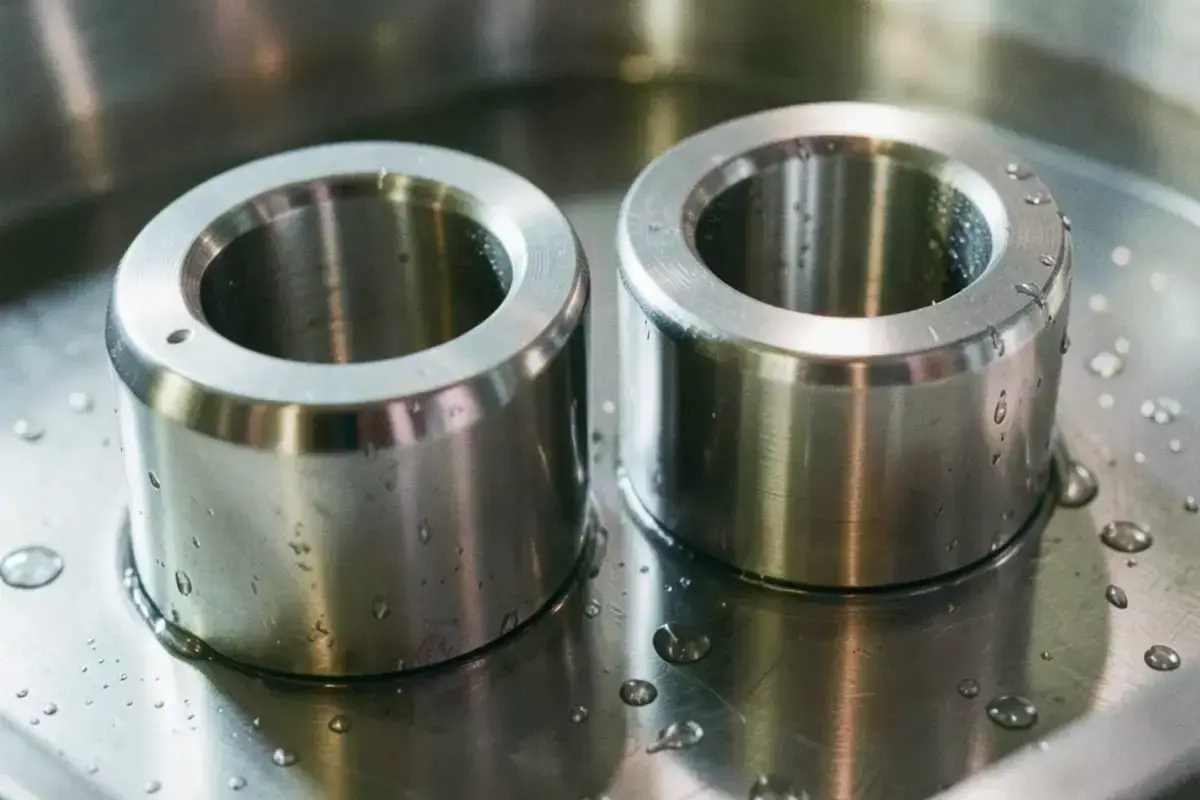
Polished stainless steel parts just removed from an electropolishing bath with a bright reflective surface

Why the shine is not the point

The customer who pays for electropolishing almost never cares about the photograph. They care about three things: corrosion behaviour, cleanability and dimensional confidence. Electropolishing improves all three at once, which is why it keeps showing up in medical and food-grade work even when a cheaper finish would look identical on a screen.

Corrosion, because a surface with no scratches and no cold-worked peaks has far fewer sites where a chloride can start working. Cleanability, because there are no crevices for residue to sit in. Dimensional confidence, because the process is additive in no way — it removes a predictable amount of metal, so a drawing tolerance is respected rather than consumed.

At inflpanjlott.com we run passivation in the same route immediately after polishing. A polished stainless part left sitting overnight in a shared shop will pick up free iron from a neighbouring carbon steel job, and that staining is what fails the audit.

Ra 0.2 µmTypical achieved roughness
2 – 4 daysStandard turnaround
Problem to solution

What this route actually fixes

A customer came to us with surgical tray components that kept failing a surface cleanliness audit. The parts were polished, looked good, and still failed. Under magnification the surface had a fine network of directional scratches from the belt, plus faint iron staining from handling. No amount of extra polishing would have fixed either problem — the scratches needed metal to be removed evenly, and the iron needed chemistry.

We put the parts through electropolishing and straight into passivation, in one route, in one shift. The Ra came back at 0.22 µm, the iron staining is gone, and the customer's last audit was their cleanest in a year. inflpanjlott.com still runs that exact route for them, every month, and the trays have not come back to the bench since.

The same approach works for food-grade conveyor parts, pharmaceutical fittings, and any stainless component that will be washed with aggressive chemicals rather than wiped with a cloth.
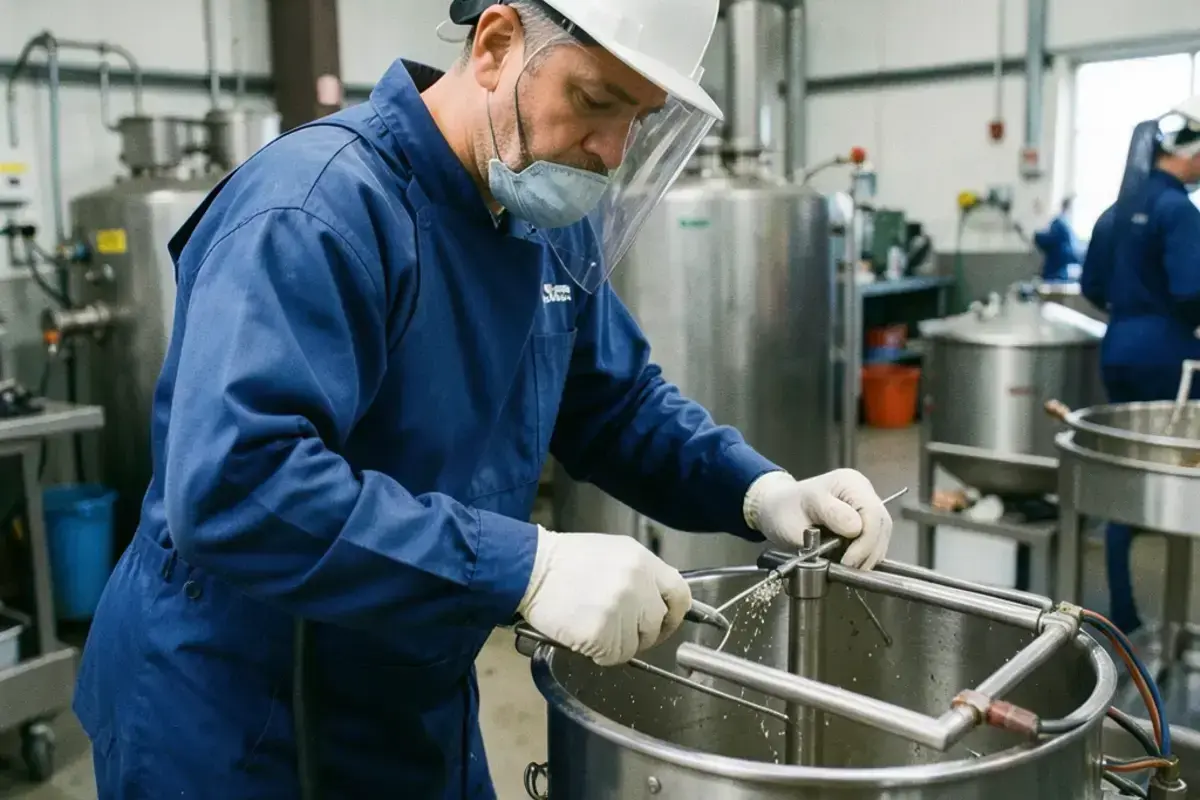
An operator in a protective apron wiring titanium racks with stainless parts before dipping them into a tank
Racking is part of the process. Contact points are chosen so no rack mark lands on a surface your customer will see.
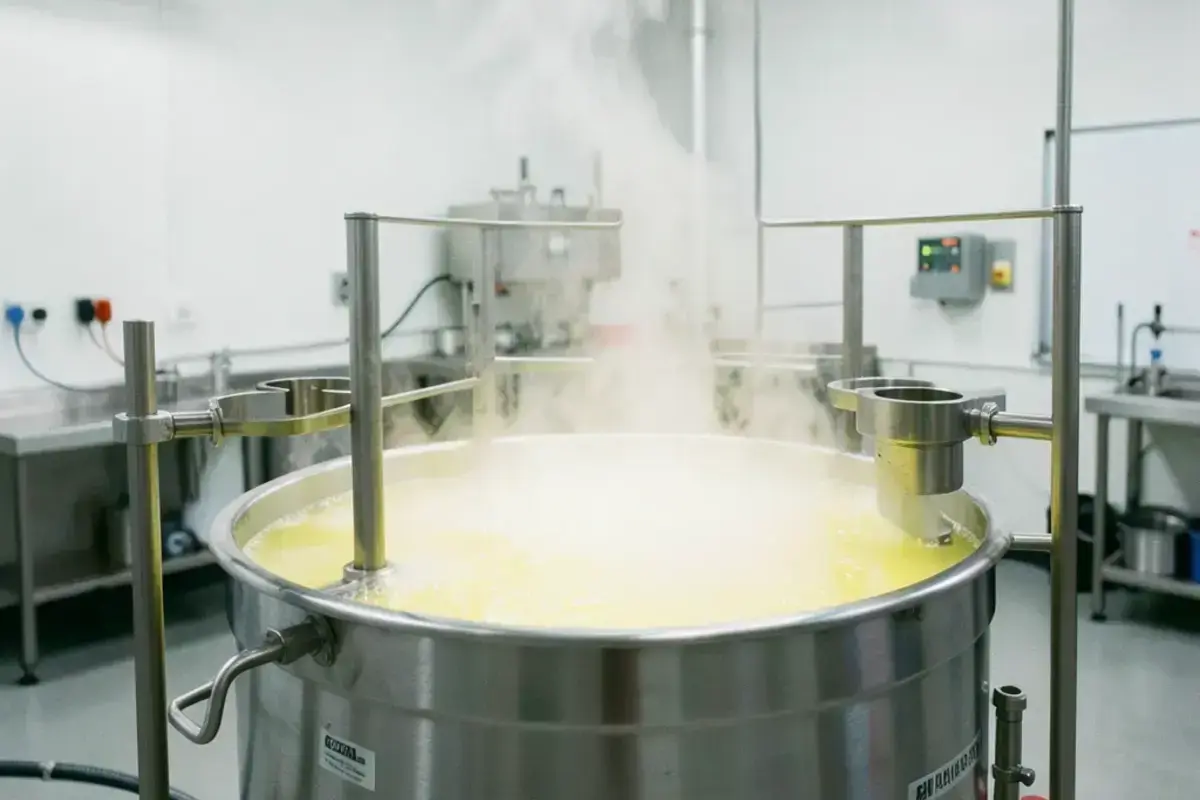
A passivation bath tank with steaming citric acid solution and stainless parts on racks
Passivation bath. Temperature and time are logged per lot, because a free-iron test result is only as good as the record behind it.
The route

Step by step

01 · Check

Alloy confirmation

Electropolishing works on conductive alloys — 300 and 400 series stainless, nickel alloys, some copper alloys. It does nothing useful on aluminium or carbon steel, and we will say so before the tank time is booked. We also check for weld heat tint and embedded iron, because electrochemistry will happily amplify a problem that was already there.

02 · Prepare

Degrease and rack

Every part is cleaned before it goes near the bath, and racked on titanium or coated racks with contact points placed deliberately. Racking is a craft, not an afterthought: the mark a rack leaves is the one feature your customer will find on inspection day.

03 · Polish

Controlled anodic removal

Current density, temperature and time are held inside a narrow band, usually 20 to 40 seconds per pass. Over-polishing is a real risk: too long and the surface starts to grow microscopic etching, which reads as a dull haze under raking light. We remove the minimum that meets the specification.

04 · Passivate

Same shift, same route

Passivation follows immediately, in citric or nitric chemistry depending on the alloy and the customer's documentation requirements. Parts never sit unpassivated overnight in our building, and the cycle is logged so the free-iron test can be traced.

05 · Report

Ra, passivation record, photographs

inflpanjlott.com reports roughness on sampled pieces, the passivation cycle record, and photographs of the actual lot. If your quality system needs a free-iron test certificate, that is quoted separately and run at a partner lab — we do not fake a certificate we did not perform.

Price

What it costs

Electropolishing is priced by surface area, because that is what the process actually consumes. Small precision parts with lots of detail run at the low end, large housings and frames run at the high end. Passivation on its own is much cheaper and takes one to two days.

$9 – $46 per pieceElectropolishing, dependent on area and complexity of racking
$4 – $14 per piecePassivation only, one to two working days
2 – 4 working daysStandard turnaround, with same-day options through the second shift

Electro finishing questions

It removes a small, predictable amount of metal, so it always takes material away. If your part is already at the low limit of a tolerance, inflpanjlott.com will tell you to grind first rather than hope the polish step leaves you enough stock.
Not usefully. Electropolishing is a stainless and nickel alloy process here. For those materials we would talk to you about blasting, mass finishing or a coating instead — whatever actually gets you the result you described.
Typically 2 to 5 microns per side, sometimes more on rougher surfaces. It is small enough to be invisible on a dimension, which is precisely why we check incoming geometry before starting.
If the part will see moisture, salt or aggressive cleaning, yes. Polishing opens a fresh, very active surface, and passivation restores the protective oxide layer. inflpanjlott.com normally runs both in the same route anyway.
Yes, with custom racking. Blind tubes and deep cavities need careful fixture design so the solution circulates — the difference between a good result and a stained pocket is entirely in that racking.

inflpanjlott.com can send back a first-pass sample

Send two or three of your own parts. We finish them, you look at them under your own light, and then you decide about the batch.