Industrial alliance: 02 / five-state routing Intake: open Shift: 24/7 Tel: +1 (305) 471-9286
inflpanjlott Surface Finishing
Call +1 (305) 471-9286
Home → Services → Grinding and lapping

Precision grinding and lapping at inflpanjlott.com

This is the cell that other shops call when nobody else wants the job. We take castings, plate, stampings and machined blanks and bring them to 0.01 mm flatness with a surface that does not carry a visible tool spiral. Below: the machines, the tolerance we can actually hold, what it costs, and the four mistakes that ruin a ground part before it ever gets polished.

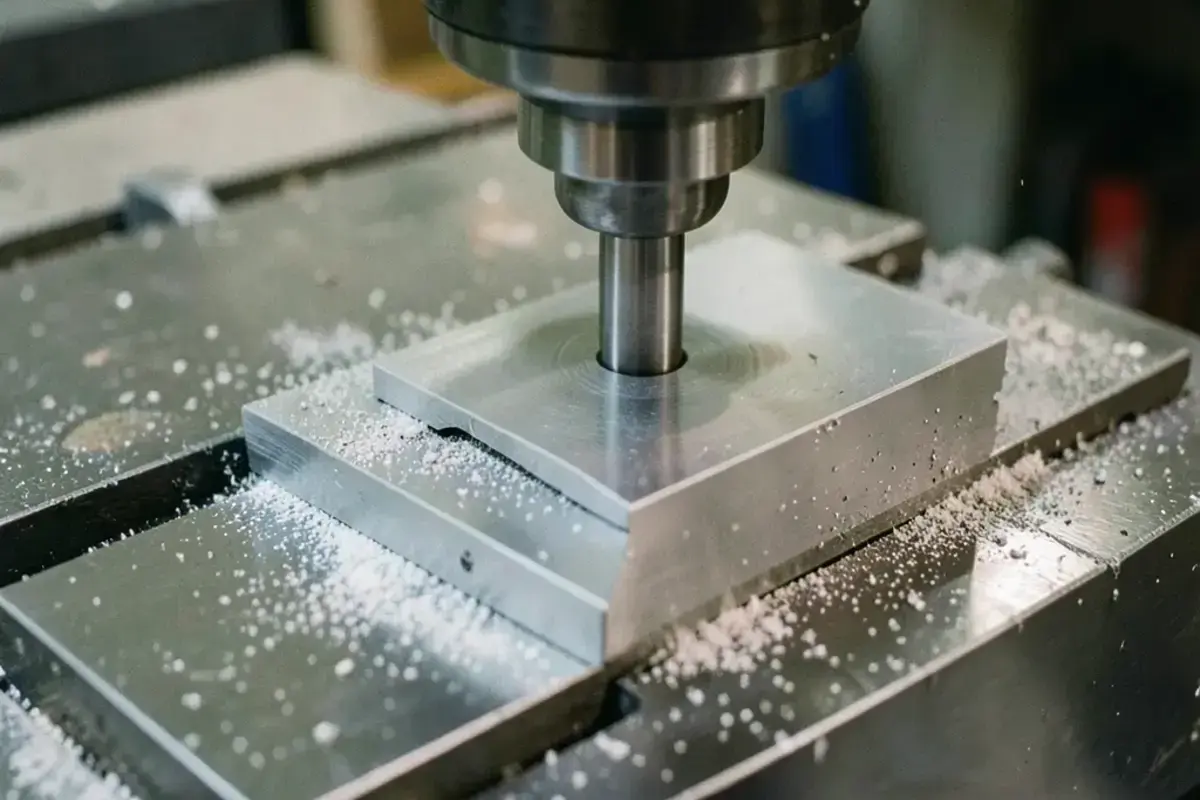
A surface grinder table with coolant and a rectangular steel blank being ground to size
Why grind at all

The problem this cell solves

A part coming off a mill or a casting line carries three separate problems, and they need different tools. There is stock to remove, which is a sizing job. There is residual stress and distortion, which is a geometry problem. And there is the machining spiral, which is a finish problem no amount of polishing will truly hide.

Polish a spiral mark and you get a shinier spiral mark. That is why inflpanjlott.com grinds before we polish, every time. The lapping step at the end is not there to make the part pretty — it is there to take the last few microns off in a way that leaves a surface which stays flat when the temperature changes.

For aluminium parts, the same logic applies with a different risk: aluminium moves a lot with heat, so a part ground tight and finished bright can still grow after it is in service. We tell you when the tolerance you drew needs a stress-relief step first, and it is one of the more common conversations we have with new customers.

Up to 1.2 m plate lengthDouble-disc lapping holds a 0.01 mm window across 1.2 m; larger parts are measured in sections.
Soft-jaw fixturingCustom urethane and soft-solution jaws for thin panels that must not be marked.
Stress relief availableAnnealing and vibratory stress relief before finishing when the drawing needs it.

Four mistakes that ruin a ground part

1. Grinding without a stress plan. A rigid part with locked-in stress will move after finishing, and your flatness reading at the bench will be a lie by the time the part reaches the assembly.

2. Marking during fixturing. Hard jaws leave witness marks exactly where your customer looks first. Soft jaws cost us time, which is why we charge for them honestly rather than hiding it in the unit price.

3. Skipping the lapping pass. A ground surface is accurate but still shows directional lay under raking light. One lapping pass removes it and costs a fraction of what a customer thinks it costs.

4. Polishing too early. Once a part is polished, any further handling scratches it. The finishing route has to run in the right order or the last step undoes the first.
The route

What happens to your part

01 · Incoming

Deburr, clean and measure

Parts arrive with scale, casting skin or paint edges. We media-blast or deburr first, because a grinding wheel meeting a 0.5 mm burr is a wheel that will load and glaze in ten minutes. Incoming dimensions get recorded so we can tell you later exactly what the stock removal cost you.

02 · Fixturing

Custom jaws, one setup

Soft jaws or a vacuum fixture, built for your part specifically. The goal here is to finish the whole batch in one setup, because every re-fixturing pass is another chance to introduce error. Our fixture designs live in a rack and get reused on your repeat orders for years.

03 · Grinding

Rough, then semi, then finish passes

Surface or cylindrical grinding in stepped passes so the part never distorts under its own heat. Roughing removes stock, semi-finishing brings geometry in, and the final pass is deliberately light — heavy final passes are what make parts look ground and feel wrong.

04 · Lapping and finishing

Double-disc lap, then polish if asked

Double-disc lapping takes the last few microns off and leaves a surface with no lay direction. If you want a mirror, polish comes after lapping and never before — polish on a part that still has geometry error just hides the error until the customer finds it with a straightedge.

05 · Handover

Measure, report, pack

Flatness, thickness and roughness readings on every piece at 10-piece intervals, a signed report, then protective packing. inflpanjlott.com documents the whole lot so a repeat order twelve months later lands in exactly the same window.

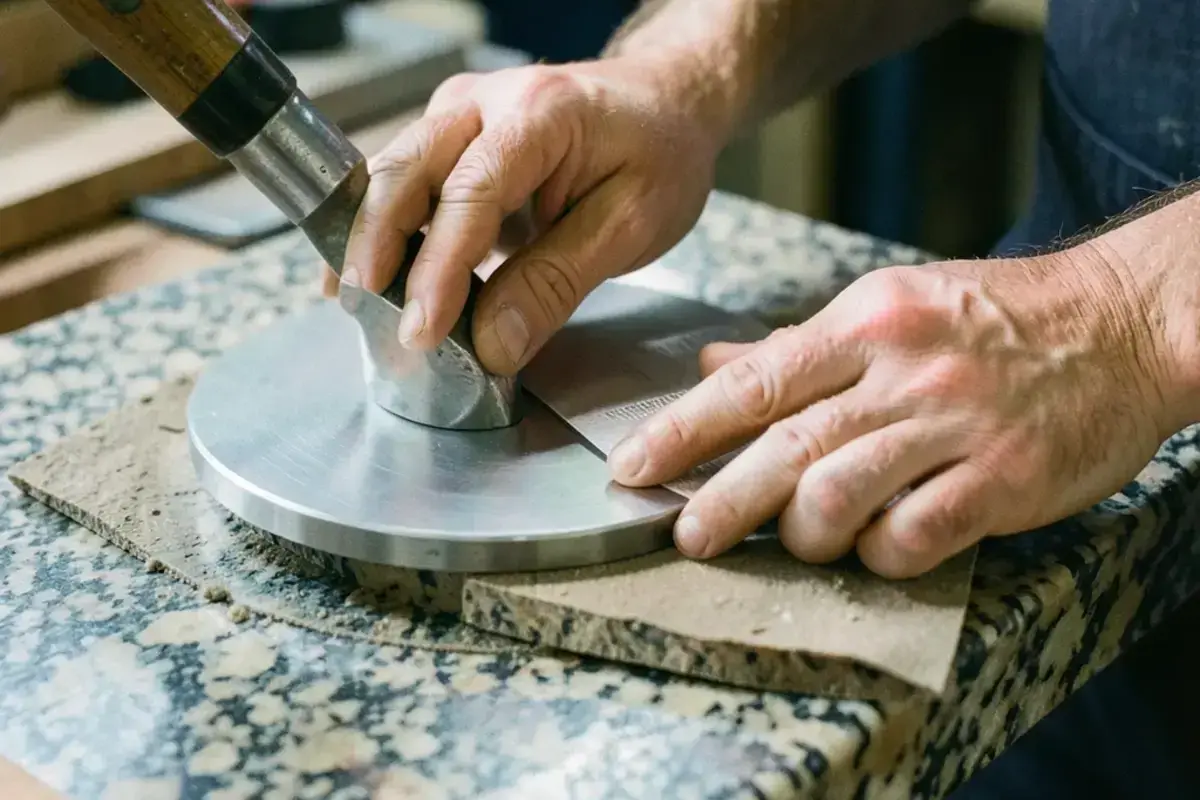
Hand lapping a flat metal plate on a granite surface plate with abrasive paper
Hand-lapping a plate where a machine would be overkill — sometimes ten minutes of manual work beats an hour on the disc machine.
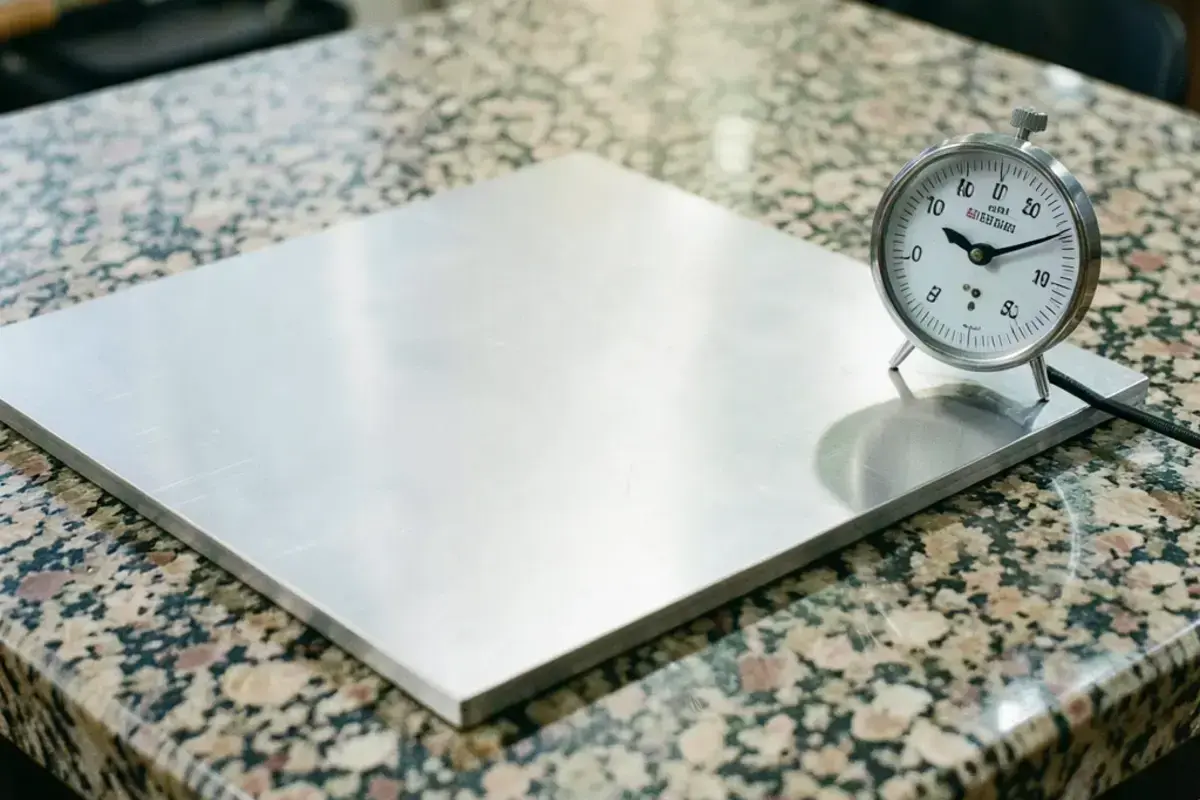
A large flat steel plate on a granite inspection table next to a dial indicator reading flatness
Every plate is checked with a dial indicator before it leaves. This is the reading that goes on your report, not a photograph.

Grinding questions, answered

0.01 mm across plates up to 900 mm on the double-disc lapping cell. Above that we measure in sections and the number grows — tell us the length and we will give you a realistic figure rather than the marketing one.
Between $18 and $120 per piece, driven mostly by size, stock removal and whether the batch needs its own fixturing. Small precision parts sit at the low end; large plates with heavy stock removal sit at the high end.
Three to five working days for a normal batch, plus fixture time on the first run. Rush lots go through the second shift — call before noon and a stopped line usually gets parts the same evening.
Yes, with two caveats we raise up front: aluminium clogs abrasive wheels faster, so the media sequence matters, and it moves with temperature, so parts with tight flatness often need a stress-relief step first. inflpanjlott.com will tell you before you order, not after.
One piece is fine. The fixture cost is the same whether you send one or a thousand, which is why the first-run price per piece is higher than the repeat price. Most customers find the second order cheaper per unit for exactly that reason.