Abrasive blast finishing at inflpanjlott.com
Blasting looks simple and is not. Push media too hard and you round an edge the drawing depends on. Use the wrong media on aluminium and you contaminate the surface with iron, which then rusts a week later in your customer's yard. What follows is how inflpanjlott.com picks the media, prepares the part and prices a batch by area rather than by weight.
Scale, heat tint and paint that has to go
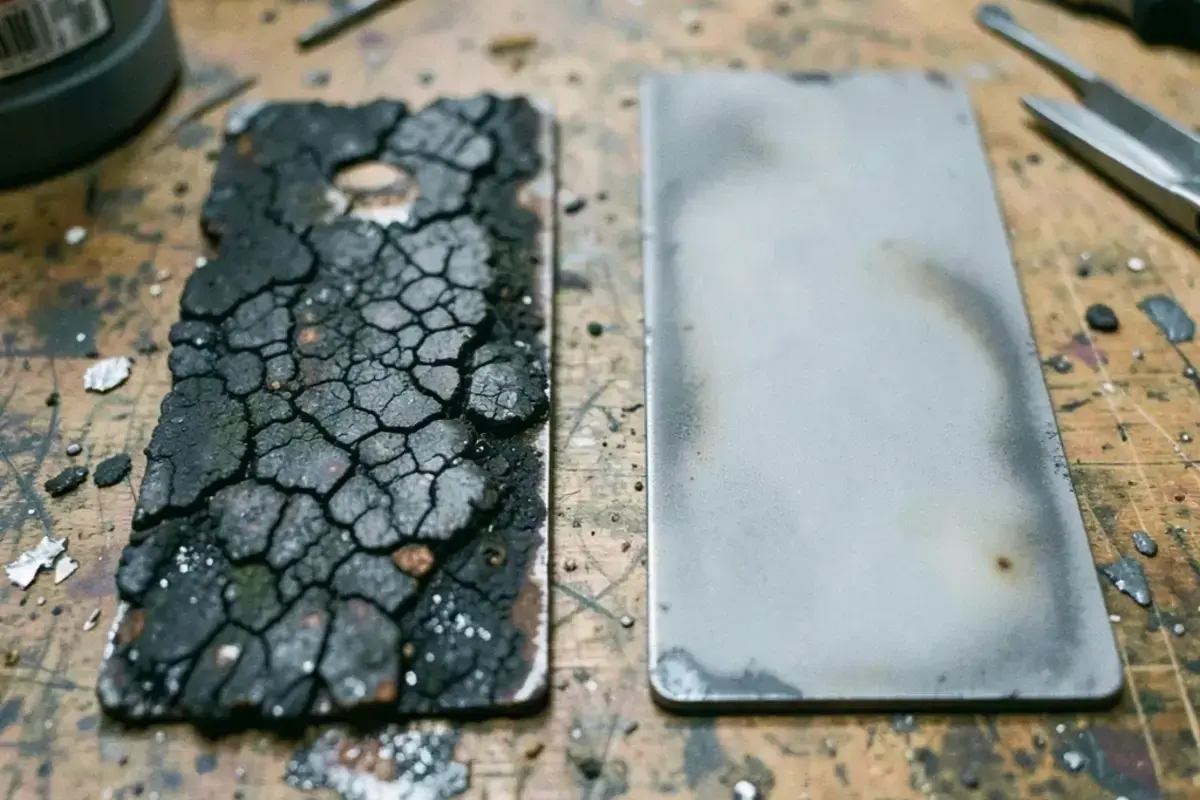
A fabricator came in with welded frames that had been shot with old mill scale. The welds looked fine from a metre away and the paint had been applied anyway, which is a slow way to build a problem. Under the coating the scale was lifting, and every time the frame flexed in service, the crack grew.
We blasted them back to clean metal, removed the paint chemically first so the media would not smear it deeper, and left a uniform matte surface that the powder coat actually bonded to. The frames went back into service the same week. inflpanjlott.com now runs that prep step for them on every new weldment, which is cheaper than repainting a failed frame and much cheaper than the replacement.
The second common case is architectural stainless. A fabricator wants a consistent fine satin across a whole railing panel so it does not read as a patchwork of hand-polished pieces. That is a blasting job with a fine non-metallic media, and the reason every panel matches is the same: one media, one pressure, one distance, logged per lot.
Media, pressure, distance, angle
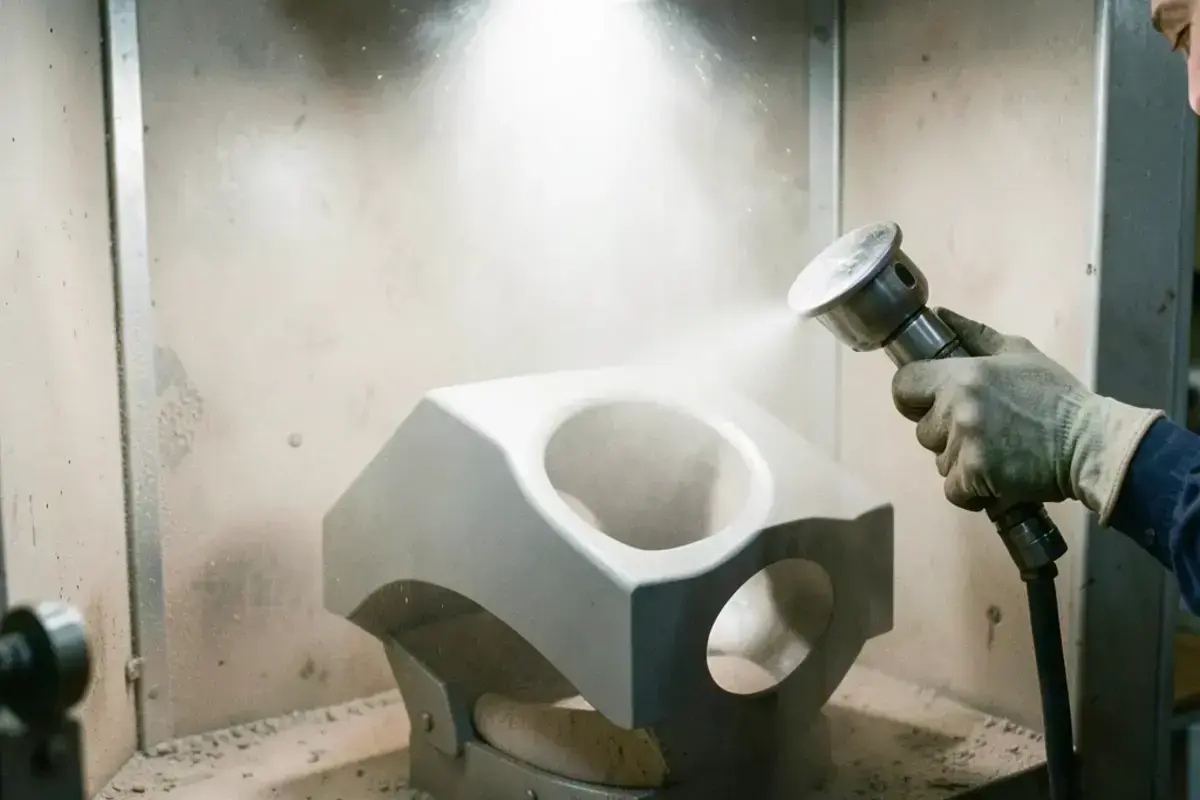
Four variables decide a blasted surface, and inflpanjlott.com logs all four for every lot so a repeat order matches. Pressure sets how deep the media cuts. Distance and angle set how much of that cutting energy reaches the surface rather than bouncing off. Media choice sets whether you are removing scale, shaping a texture or cleaning a coating.
A typical prep job on carbon steel runs around 60 mesh glass bead at roughly 4 bar, held at a consistent standoff. Stainless architectural work uses a fine glass or ceramic media for the satin finish. Aluminium uses non-metallic media, always — this is the one rule we never bend, because a single contaminated aluminium part that rusts in a customer's yard costs far more than the time saved.
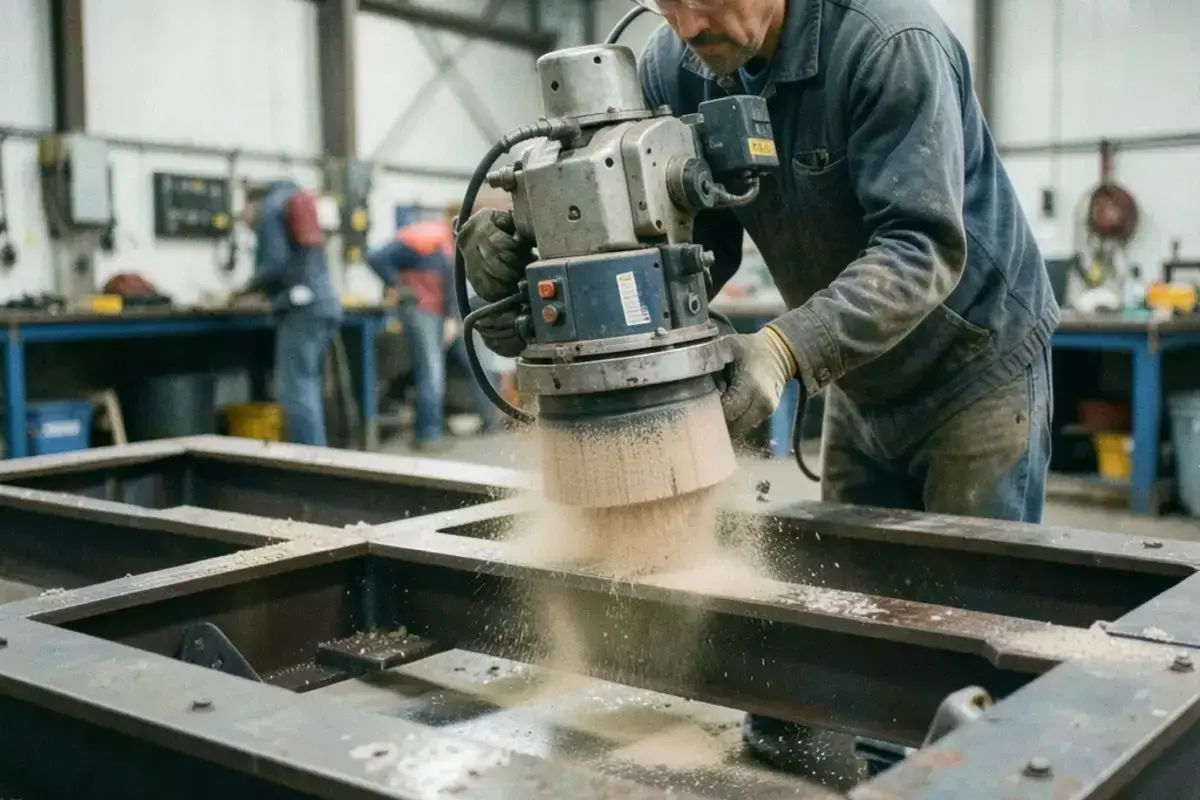
Large frames go on the robotic cell, which keeps the pattern consistent across a twelve-metre structure. Hand cabinet work is better for small or delicate pieces where a robot head would be overkill.
Blasting is priced by area
Blasting consumes media and time in proportion to surface area, so that is how inflpanjlott.com quotes it. Weight barely matters — a heavy fabricated frame with a modest surface can cost less than a small part with a complex, hard-to-reach geometry.